ROLLINGDOG focuses on one thing: providing efficient painting tools for DIYers and professional painters, making every paint job easier.
You’re choosing from a complete tool system that covers every stage of a painting project, from surface prep, to rolling on paint, to final touch-up and repair.
Our core product lines are:
Let’s walk through each line and see where it fits in your next project.
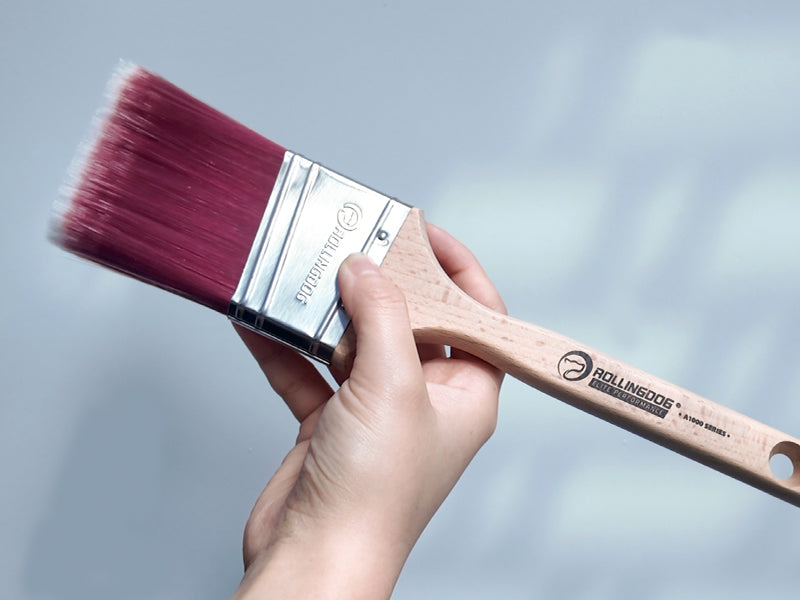
Paint Brush - Control for Edges and Detail Work

When should you use a brush?
Even if you use rollers for most of the wall, a paint brush is still essential whenever you need precision and control, especially for:
- Cutting in along ceiling and baseboard
- Painting around window frame, door frame and outlet
- Working on trim, door, furniture and railing
- Small touch-up, repair and final detailing
What makes a good paint brush?
A good brush should make it easier to lay down clean, sharp lines. Key factors include:
- Filament type
Synthetic filaments are ideal for water-based and latex paints. They hold their shape well and offer good snap and durability.
- Paint load and release
The brush should pick up enough paint without dripping and then release it smoothly and evenly onto the surface.
- Shape and size
Angled heads are great for cutting in and working into corner.
Flat heads suit wider trim and panel.
- Handle and balance
Comfortable grip and good balance help reduce fatigue during longer painting session.
Paint Brush Product Line
Designed for cutting in corner and along edge. Help you paint crisp, straight lines with confidence.
Ideal for trim profiles, door frame, furniture edge and other small-detail work where control matters more than speed.
Suited for wider trim, door, paneling and other flat surface.
Better suited for stains and other penetrating coatings on wood, such as decks, fences and outdoor furniture.
Paint Roller - Fast, Even Coverage on Large Surface

When should you use a roller?
Any time you’re dealing with larger surface, a roller is almost always the most efficient choice:
- Interior wall and ceiling
- Large feature or accent wall
- Garage, basement and utility room
How do you choose the right roller?
A good roller should match your surface and your paint, so you get even coverage with less effort.
- By surface texture (nap length)
Short nap for smooth wall and new drywall, medium nap for lightly textured wall, long nap for rough or heavily textured surface.
- By size and format
Standard 9 inch rollers for most wall and ceiling, smaller and mini rollers for tight area, edge and furniture, wider rollers for large surface.
- By cover material
Synthetic covers work well with most latex paint and are a safe, all-round choice for interior projects.
Paint Roller Product Line
Typically includes a roller frame, paint tray and matching accessories. It’s a great option for beginners or anyone who wants to grab everything they need for a room in one go.
Available in different sizes and nap lengths, so you can match your roller setup to your specific wall texture, project size and paint type.
Surface Prep - Building a Solid Base with Putty Knife and Scraper

Why is surface prep so important?
No matter how premium your paint is, it can’t hide poor preparation. Skipping surface prep often leads to:
- Peeling, flaking or blistering paint
- Poor adhesion on glossy, dirty or greasy surface
- Visible cracks, dents and roller marks
- Uneven sheen and “patchy” areas that catch the light
Typical surface prep tasks
In real projects, surface prep usually means:
- Scraping off loose or peeling paint
- Removing bumps, residues or old caulk
- Filling nail holes, small cracks and dents (with filler or compound)
- Getting the surface ready for sanding and leveling
Surface Prep Product Line
Used to apply and spread filler or patching compound, fill nail holes, cracks and small damaged areas, and feather the edges of repairs so they blend into the surrounding surface and sand down smoothly.
Used to remove loose or peeling paint, flaking coating and stubborn residue like old adhesive or caulk, helping you get back to a solid, stable base before you repair and repaint.
Drywall Tools - Your Go-To Gear for Flat, Repairable Wall

When do drywall tools really matter?
Drywall tools come into play when you go beyond simple touch-up and start tackling:
- New drywall installation or remodeling work
- Joints and seams between drywall sheets
- Screw heads, inside corners and edge details
- Larger damaged areas that need patching
- Uneven, wavy wall or surface where you want a texture effect
In these situations, Drywall Tools help you build a flat, solid, professional-looking base for painting.
Drywall Tools Product Line
Hand sanders and pole sanders for smoothing joint, repair and section of wall or ceiling.
A wider blade designed to spread compound over larger areas and pull it flat.
The core tool for applying joint compound over seams, screw heads and small to medium repair areas.
After spraying or applying compound, the knockdown knife is used to “knock down” the peaks and create a softer, more even texture pattern.
Explore our full collections of Paint Brushes, Paint Rollers, Surface Prep and Drywall Tools, and choose the right tools for your next project. Let ROLLINGDOG help make every paint job easier and more professional.