

What Is a Putty Knife?
A putty knife is a hand tool with a flat blade attached to a handle. It plays an important role in painting, wall repair, and surface preparation.
It can spread filler, patch small holes, remove loose paint, lift old wallpaper, and clean away surface residue.
For painters, drywall professionals, and DIY users, it is one of those compact tools that often becomes useful at several stages of a project.
What Is a Putty Knife Used For?
The exact use of a putty knife depends on the type of blade. Flexible blades are generally better for spreading and smoothing, while stiff blades are better for scraping and removing material.
Here are some of the most common uses.
Applying and Removing Putty
Applying putty is the traditional purpose of a putty knife.
The flat blade can pick up a small amount of material, press it onto the work area, and spread it into a smooth layer. This is useful for window glazing, wood repair, and other small filling jobs.
A putty knife can also help remove old putty that has cracked, dried out, or separated from the surface.
Scraping Paint, Wallpaper, and Adhesive
A putty knife can be used as a light-duty scraper during surface preparation.
Common tasks include:
- Removing loose or peeling paint
- Lifting the edge of old wallpaper
- Scraping away small amounts of adhesive
- Cleaning dried compound from suitable surfaces
- Removing flaking material before repainting
Filling Holes and Cracks
One of the most common DIY uses for a putty knife is filling nail holes, dents, and small cracks.
The blade helps push spackle, filler, or compound into the damaged area. It can then remove excess material and smooth the repair so that it blends with the surrounding surface.
Smoothing Caulk
A putty knife can also help shape or remove small amounts of caulk.
After caulk is applied to a joint or gap, the edge of the blade can be used to remove excess material and create a cleaner line. It may also help remove old caulk that has already loosened from the surface.
Common Types of Putty Knives
Putty knives are available in different blade widths, shapes, and levels of flexibility.
The three most common categories are flexible putty knives, stiff putty knives, and multipurpose putty knives.
Flexible Putty Knife
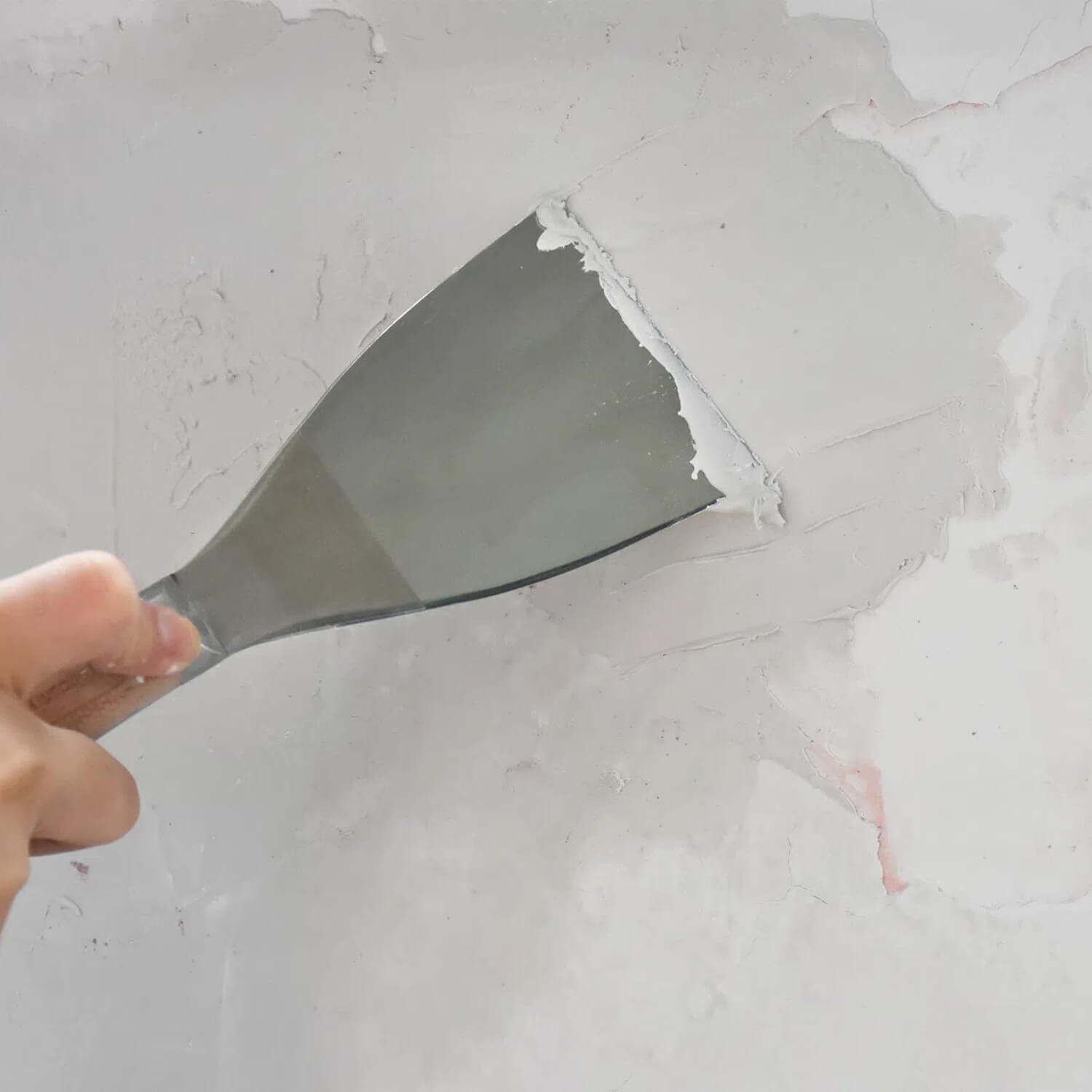
A flexible putty knife has a thin blade that bends slightly under pressure.
This flexibility allows the blade to follow small surface variations and spread soft materials more evenly. It is especially useful when the goal is to create a thin, smooth layer.
Common applications include:
- Applying putty
- Spreading spackle
- Filling nail holes
- Smoothing wood filler
- Applying small amounts of joint compound
- Finishing local wall repairs
Stiff Putty Knife
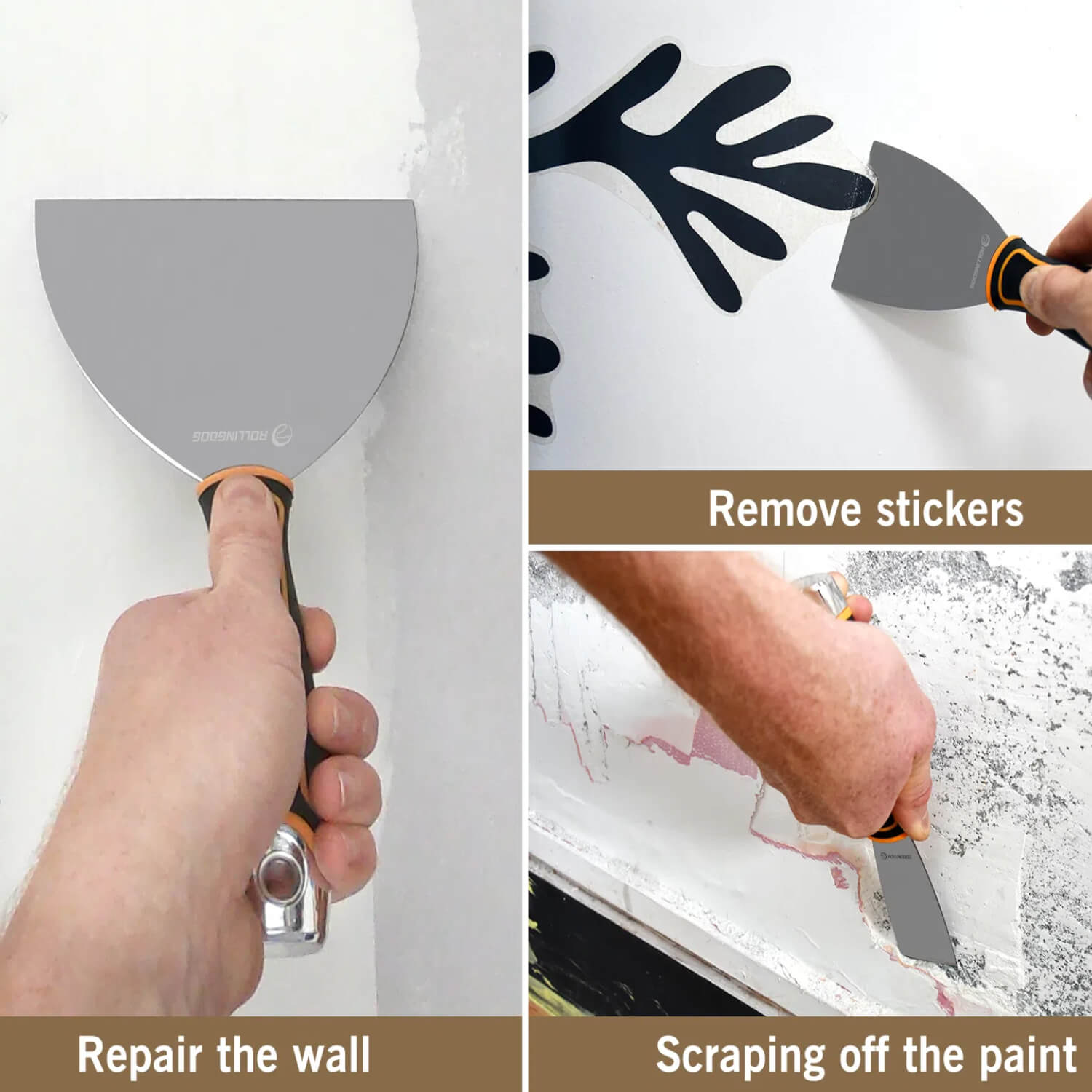
A stiff putty knife has a thicker, more rigid blade.
Instead of bending easily, it transfers more force from the handle to the working edge. This makes it more suitable for tasks that involve lifting, scraping, or removing material.
Common applications include:
- Scraping loose paint
- Removing old putty
- Lifting wallpaper edges
- Removing adhesive residue
- Cleaning hardened material from durable surfaces
- Preparing damaged areas before repair
Multipurpose Putty Knife
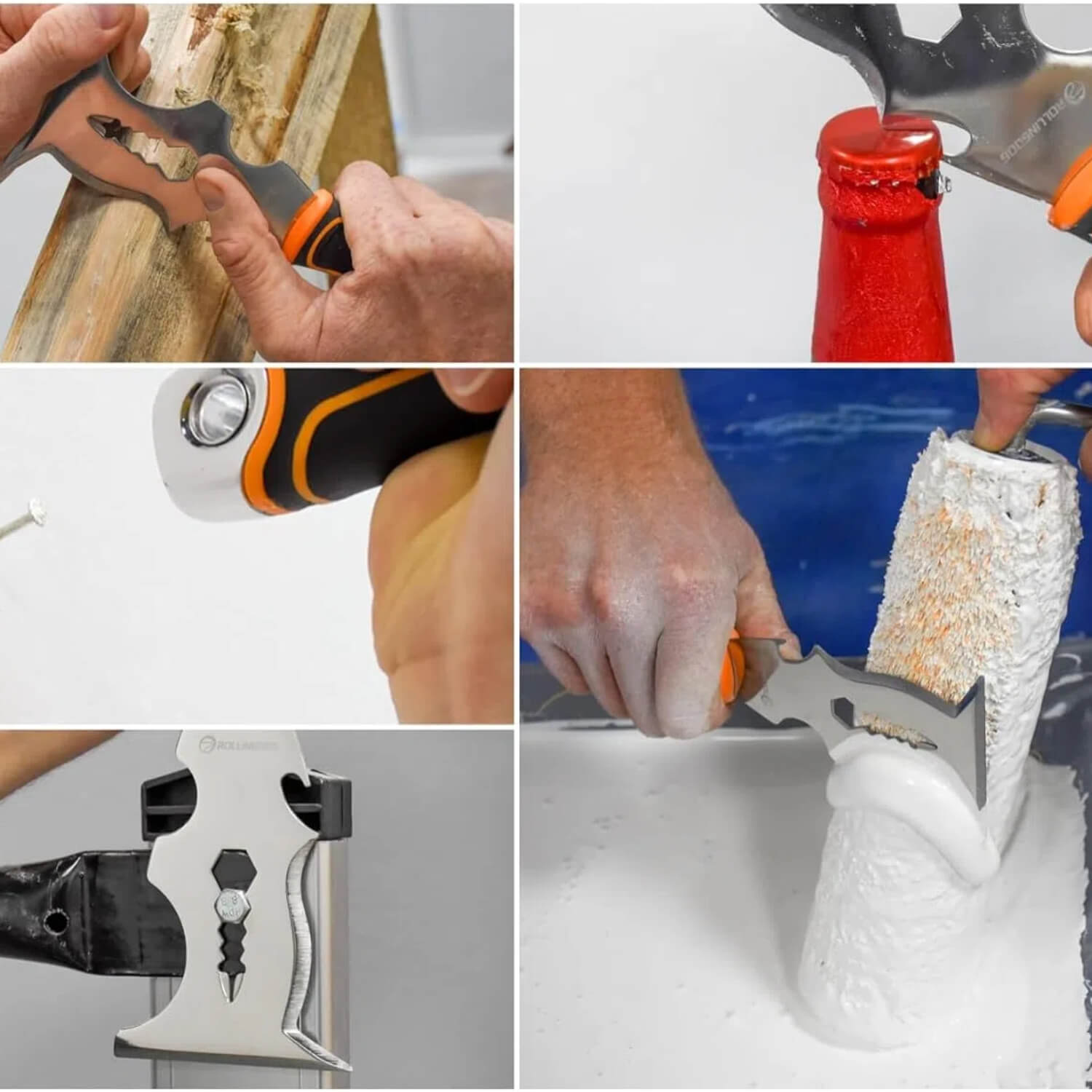
A multipurpose putty knife combines several functions in one tool.
Depending on the design, it may be able to:
- Spread filler
- Scrape paint
- Clean a paint roller
- Open a paint can
- Pull small nails
- Set nail heads
- Remove loose material
- Open bottles or packages
A multipurpose tool can be useful for painters who want to carry fewer individual tools. Its thicker blade and shaped edges make it practical for many job site tasks.
Basic Care and Safety
Proper care helps keep a putty knife clean, flat, and ready for the next project.
Clean the Blade Before Material Hardens
Putty, spackle, adhesive, and compound become much more difficult to remove after they dry.
Wipe the blade regularly while working, as dried material may leave marks in freshly applied filler.
Keep the Blade Dry
- After cleaning, dry the blade thoroughly before storage. Moisture can lead to corrosion, staining, or damage over time.
- Store the tool in a dry location.
Protect the Working Edge
The edge of a putty knife should remain smooth and even.
Avoid dropping the tool onto hard surfaces or using it for heavy prying. A bent edge, deep nick, or metal burr can leave marks in the filler and make smooth application more difficult.
FAQ
What Is the Difference Between Flexible and Stiff Putty Knives?
A flexible putty knife bends slightly and is better for spreading, filling, and smoothing soft materials.
A stiff putty knife transfers more force and is better for scraping, lifting, and removing old material.
Is a Putty Knife the Same as a Painter's Multi-tool?
No.
A putty knife is mainly designed for spreading, filling, smoothing, and light scraping.
A painter's multi-tool uses a thicker, specially shaped blade to perform several additional functions, such as opening paint cans, cleaning rollers, pulling nails, and scraping surfaces.
Can I Use One Putty Knife for Every Task?
A medium-flex putty knife may handle several basic household repairs, but one tool will not perform every task equally well.
A flexible knife is more effective for spreading material. A stiff knife is more effective for scraping. Users who regularly complete painting and repair work will usually benefit from keeping both types available.
A putty knife is a simple yet highly practical tool widely used in painting, drywall repair, and surface preparation.
Different putty knives are designed for different tasks. Flexible blades are better suited for spreading and smoothing, while stiff blades provide greater control for scraping and removing materials.
By understanding these differences and matching the blade type, width, and design to the specific needs of your project, you can choose the right putty knife and work more efficiently.


